Abu Dhabi, UAE – February 2026 – The Mohamed bin Zayed Raptor Conservation Fund (MBZRCF) played a prominent role in the second coordinated session of the International Single Species Action Plan (ISSAP) for the Sooty Falcon, organized by the UNEP/CMS Raptors MoU on 5 February 2026.
Madagascar Expedition Reveals Critical Conservation Insights
Dr. Munir Virani, COO of the MBZRCF, presented groundbreaking findings from the Fund’s satellite tagging initiative in Madagascar, conducted in collaboration with The Peregrine Fund’s Madagascar Programme. The research has yielded vital data for understanding this threatened raptor species.
Key Findings from the Madagascar Expedition
The first MBZRCF expedition to Madagascar took place from 1–18 March 2025 in the Alley of the Baobabs area in western Madagascar, where the team successfully:
- Captured and fitted nine sooty falcons with advanced satellite and GSM transmitters
- Confirmed the Alley of the Baobabs as a critical wintering stronghold for the species
- Identified connections between wintering birds and three distinct breeding clusters located in the Sahara, along the Red Sea coast, and in the Arabian Gulf
- Documented a mortality event in Ethiopia, with rapid response from local teams to recover the transmitter and determine predation as the most likely cause
This satellite tagging research is providing unprecedented insights into the migration patterns, breeding origins, and threats facing sooty falcons across their range, from breeding grounds in North Africa and the Arabian Peninsula to their critical wintering areas along the coast of Southeast Africa and Madagascar.
Contributing to Global Conservation Coordination
The MBZRCF’s participation in this international workshop underscores the Fund’s commitment to collaborative conservation efforts. The workshop brought together experts from across the sooty falcon’s breeding, migration, and wintering range to establish priorities for implementing the recently adopted 12-year ISSAP (2024-2036).
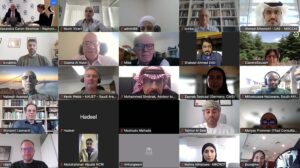
Dr. Virani also chaired the working group on resource mobilization, helping identify funding opportunities and conservation leadership needs, particularly in non-breeding countries along the migration route. The group highlighted several potential funding sources and emphasized the critical need to strengthen conservation capacity in key stopover and wintering areas.
Collaborative Conservation for a Threatened Species
The workshop, coordinated by the CMS Raptors MoU and opened by Ms. Rouba Abou-Atieh (CMS office – Abu Dhabi), facilitated knowledge sharing among range countries and conservation organizations. The MBZRCF extends its appreciation to all participants, including technical presenters from the Kingdom of Saudi Arabia’s National Center for Wildlife, the Sultanate of Oman’s Environment Authority, and the Hierofalcon Research Group, as well as working group chairs and all contributing experts.
The sooty falcon faces multiple threats across its range, including population declines, pesticide poisoning, infrastructure-related mortality, and habitat pressures. Through initiatives like the Madagascar satellite tagging programme, MBZRCF continues to advance the scientific knowledge needed to inform effective conservation strategies for this remarkable species.
Looking Ahead
The data generated by MBZRCF’s satellite tagging programme will continue to inform conservation priorities and actions outlined in the Sooty Falcon ISSAP. The Fund remains committed to supporting research, monitoring, and conservation initiatives that protect raptors across their global range.